Front CPart C · Lifestyle № 46
Lifestyle
How to Make Pour-Over Coffee
How to make pour-over coffee at home: a medium grind, a 1:16 ratio, water just off the boil, a short bloom and a slow spiral pour for a clean, bright cup.
5 minutes
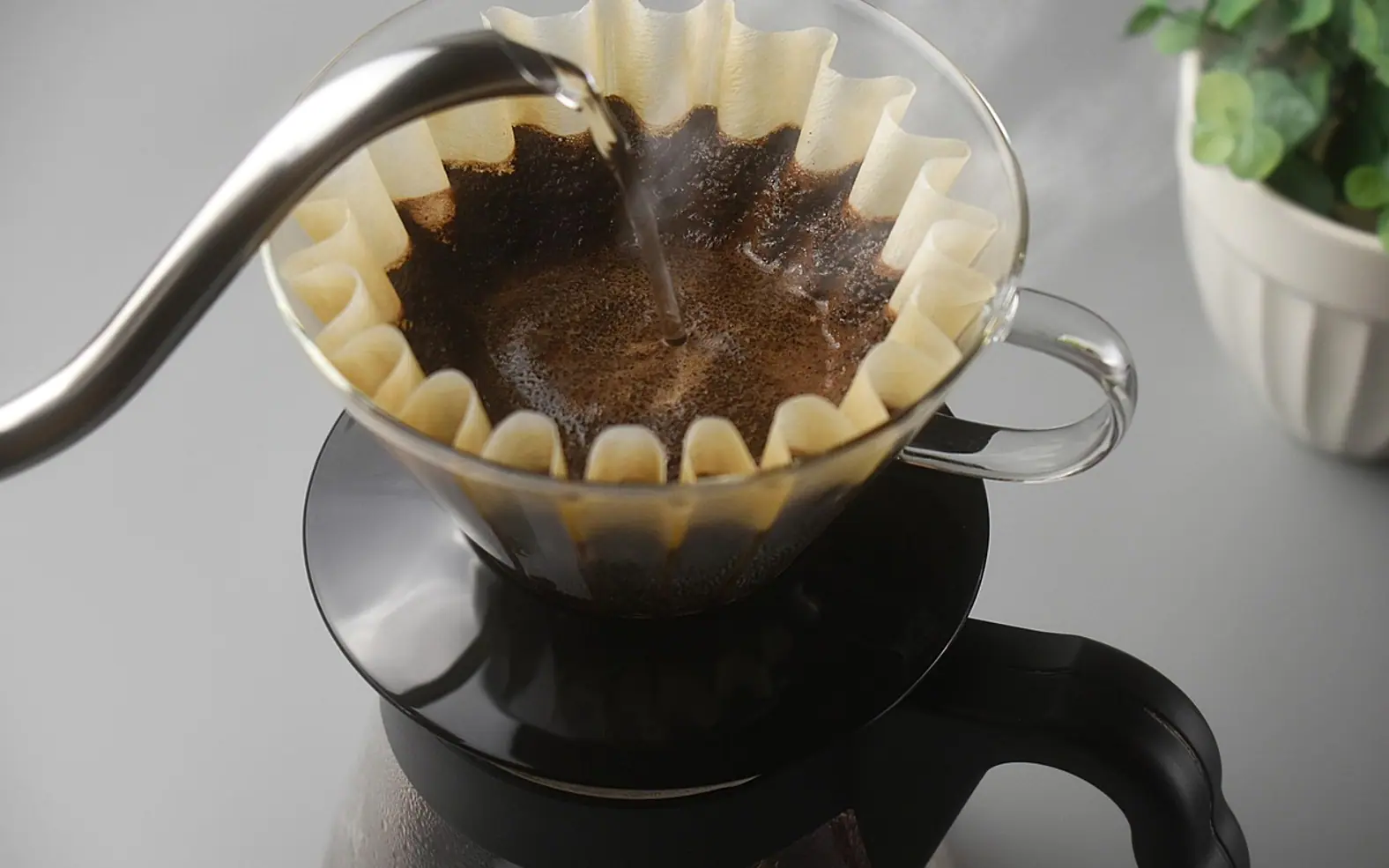
The kettle clicks off, the kitchen is still quiet, and there is a paper cone sitting on top of a mug. Pour-over is the slowest of the everyday brewing methods, and that is part of the appeal: for three or four minutes the only job is to pour water in a steady circle and watch the coffee bed rise and fall. Done with a little care, it gives a cup that is lighter and clearer than most other home methods, with flavours that are easy to pick out.
The short version: use about one gram of coffee for every sixteen grams of water, grind it medium (roughly like table salt), wet the grounds with a small splash first, wait half a minute, then pour the rest slowly in circles so the whole brew finishes in around three to four minutes.
What pour-over actually is
Pour-over is a hand-made version of drip coffee. Hot water is poured by hand over ground coffee sitting in a filter, and gravity pulls it through into the cup or jug below. Because the water passes through the grounds rather than soaking with them, and because a paper filter catches most of the fine particles and oils, the result has less body than a press but more clarity. Many people describe it as tasting "cleaner", which is why it is popular for lighter roasts with fruity or floral notes.
Kit you need (and what you can skip)
| Item | Essential? | Notes |
|---|---|---|
| Dripper or cone | Yes | Ceramic, glass, metal and plastic all work. Cone shapes and flat-bottomed shapes brew a little differently. |
| Paper filters | Yes | Buy the size made for your dripper; a poor fit lets water bypass the coffee. |
| Kettle | Yes | A gooseneck spout makes a slow, accurate pour much easier, but any kettle can be used with patience. |
| Kitchen scale | Very useful | Weighing removes most of the guesswork and makes good cups repeatable. |
| Grinder | Useful | Fresh grinding helps a lot. Pre-ground filter coffee is fine to start with. |
| Timer | Optional | A phone timer is enough. |
The ratio, the grind and the water
Ratio
A ratio of 1:15 to 1:17 is a sensible starting range. For one large mug, that is around 20 g of coffee to 320 g of water. If the cup tastes thin, use a bit more coffee next time; if it feels heavy or harsh, use a bit less. Adjust only one variable per brew, so the cause of any change stays obvious.
Grind
Medium is the usual starting point: finer than for a French press, coarser than for a moka pot. Grind size controls how quickly water runs through. Too fine and the brew stalls, tasting bitter and dry; too coarse and water rushes past, leaving the cup sour and watery.
Water
Water just off the boil works for most coffees. Let the kettle sit for half a minute after it boils, especially with darker roasts, which can turn harsh with very hot water. If your tap water tastes strongly of chlorine or minerals, filtered water usually makes a noticeable difference.
Step by step
- Rinse the filter. Fold the paper along its seam, sit it in the dripper and pour hot water through it. This removes any papery taste and warms the dripper and mug. Tip the rinse water away.
- Add the coffee. Pour in the ground coffee and give the dripper a gentle shake so the bed is level. Put everything on the scale and set it to zero.
- Bloom. Pour about twice the coffee's weight in water, just enough to wet all the grounds. Fresh coffee will puff up and bubble as gas escapes. Wait 30 to 45 seconds.
- Pour in stages. Add the remaining water in slow circles from the centre outwards, avoiding the paper at the edges. Many people pour in two or three rounds, letting the level drop a little between each.
- Let it drain. Once all the water is in, give the dripper a light swirl to flatten the bed and let it finish dripping. The whole process usually takes three to four minutes.
- Taste and note. Lift the dripper away, stir the coffee and take a sip. Jot down the dose, grind setting and time if you want to repeat or tweak it.
Fixing the cup
- Sour, sharp, thin: usually under-extracted. Grind finer, pour more slowly or use slightly hotter water.
- Bitter, dry, lingering: usually over-extracted. Grind coarser or shorten the brew.
- Brew stalls in the cone: grind is too fine, or there are a lot of fine particles. Coarsen a step.
- Flat and dull: the beans may be stale. Buy smaller bags more often and store them sealed, away from light and heat.
Pour-over, French press or moka pot?
Each method suits a different mood. The press steeps grounds fully in water and leaves the oils in, so the cup is rounder and heavier; our guide to French press coffee at home covers it step by step. A moka pot pushes water through with steam pressure and gives something short and intense, closer to espresso, as explained in using a stovetop moka pot. Pour-over sits at the light, clear end. It also needs more attention while it brews, so it suits slower mornings rather than a rushed weekday.
Brewing for two or more
Most drippers handle two mugs at once if you scale up the coffee and water and pour into a jug. Keep the ratio the same and expect the brew to take a little longer, since there is a deeper bed of grounds. For more than three cups, a larger dripper or a few rounds one after the other usually works better than overloading a small cone.
A small, thoughtful present
A ceramic dripper, a pack of matching filters and a bag of freshly roasted beans make a neat gift for someone who enjoys coffee but has not tried brewing by hand. Add a handwritten card with a starting ratio and the gift is ready to use the next morning. Bundled into a hamper with a mug and some biscuits, it fits the ideas in putting together a themed gift basket.
Quick answers
Do I have to use a gooseneck kettle?
No. It makes control easier, but pouring slowly from an ordinary kettle, or from a small jug, also works.
Can I use a reusable metal filter?
Yes. It lets more oils and fine particles through, so the cup will have more body and a little sediment, somewhere between pour-over and a press.
Is pour-over coffee stronger than drip?
Not necessarily. Strength depends on how much coffee you use for the amount of water, not on the method itself.
Questions? Write to us.
Suggestions help us plan.