Front CPart C · Lifestyle № 29
Lifestyle
How to Make French Press Coffee
How to make French press coffee at home: a coarse grind, a simple ratio, water just off the boil, a four-minute steep and a slow, clean pour.
4 minutes
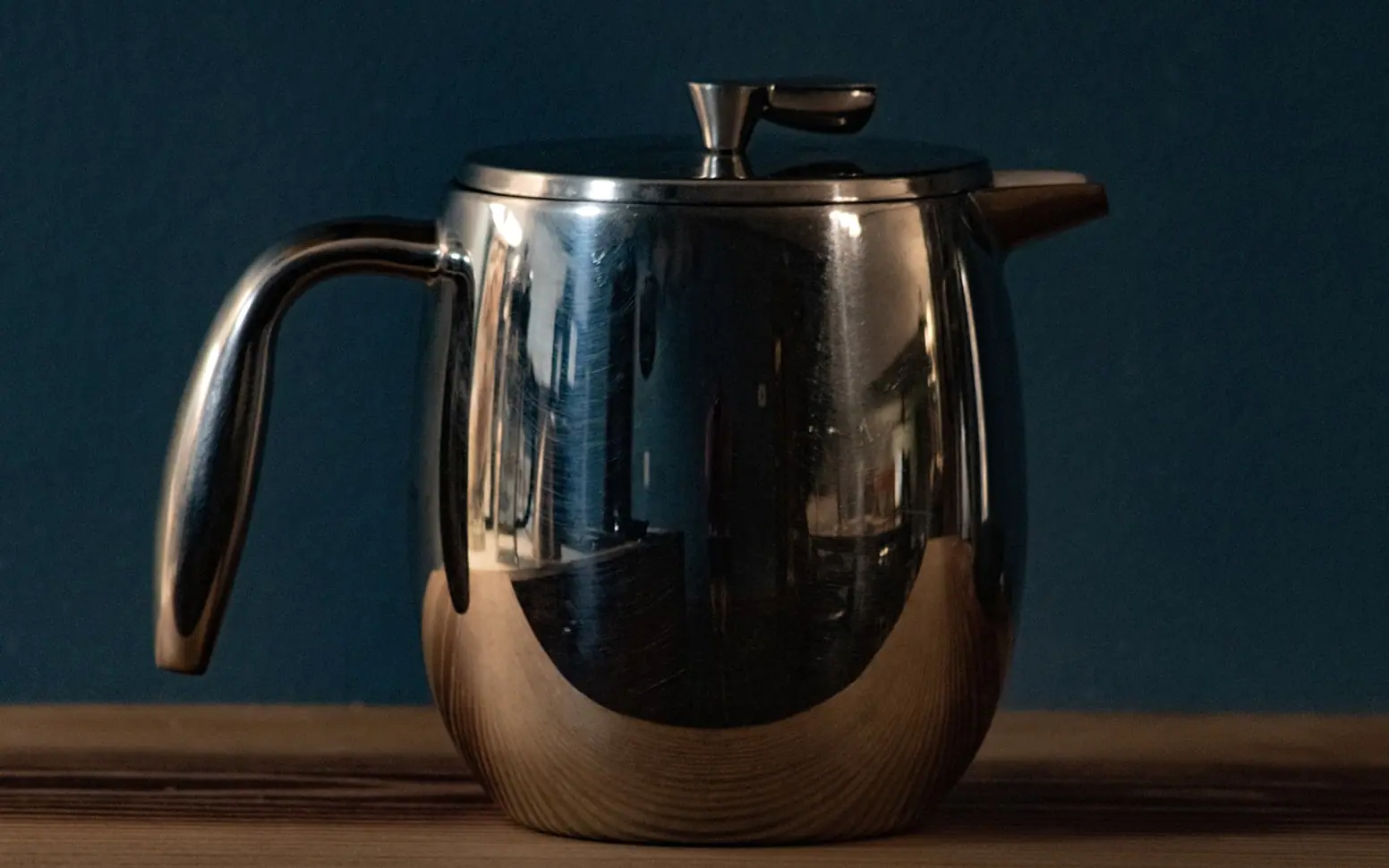
Of all the ways to brew coffee at home, the French press may be the most forgiving. There is no paper filter to fold, no machine to descale and no special kettle required. You put coarse grounds and hot water in a glass or steel jug, wait, press a mesh plunger down and pour. The result is a cup with more body and a rounder mouthfeel than most drip machines produce, because the natural oils in the coffee pass straight through the metal mesh instead of being caught in paper.
That simplicity also hides a few traps. Grind too fine and the cup turns muddy and bitter; leave it sitting on the grounds and it keeps extracting long after you stopped paying attention. The method below keeps things easy while sidestepping those problems.
What you need
- A French press of any size. Glass lets you watch the brew; double-walled steel holds heat better.
- Whole beans, ideally roasted within the last few weeks. Medium and darker roasts are the classic match, but a light roast works if you like a brighter cup.
- A burr grinder, if you have one. Blade grinders produce a mix of dust and chunks, and the dust is what slips through the mesh.
- A kettle and, if possible, a kitchen scale.
- A spoon (wooden or plastic is kinder to glass) and a timer.
The grind: coarse and even
Aim for particles roughly the size of coarse sea salt or breadcrumbs. Because the coffee sits in water for several minutes, a coarse grind slows extraction down to a pleasant pace. A fine grind does two unwelcome things at once: it over-extracts, pulling out harsh flavours, and it clogs the mesh, which makes the plunger stiff and pushes sludge into your mug.
If you buy pre-ground coffee, look for bags labelled for French press or cafetière. Standard pre-ground coffee is usually set for drip machines and will be finer than ideal.
A ratio to start from
A widely used starting point is about one part coffee to fifteen parts water by weight. Without a scale, a rounded tablespoon of coarse grounds for every small cup of water lands in the same neighbourhood. Treat this as a dial rather than a rule: if the cup tastes thin, add a little more coffee next time; if it tastes heavy or harsh, use a little less.
| Taste problem | Likely cause | Try next time |
|---|---|---|
| Watery, flat | Too little coffee or too coarse a grind | More coffee, or a slightly finer setting |
| Bitter, drying | Grind too fine or steep too long | Coarser grind, shorter steep |
| Sour, sharp | Water too cool or steep too short | Hotter water, a minute longer |
| Gritty in the cup | Fines passing the mesh | Even grind, gentler plunge, leave the last sip |
Step by step
- Warm everything. Pour a splash of hot water into the empty press and your mug, swirl and tip it out. A cold jug steals heat from the brew.
- Heat the water. Bring it to the boil, then let it rest for about thirty seconds. Water just off the boil extracts well without scorching the grounds.
- Add the grounds to the press and give it a gentle shake to level them.
- Bloom. Pour in just enough water to wet all the coffee and wait around thirty seconds. Fresh coffee releases gas and puffs up; letting it settle helps the rest of the water reach every particle.
- Fill and stir. Pour in the remaining water, stir a couple of times so no dry clumps float on top, and set the lid on with the plunger raised.
- Steep for about four minutes. This is the standard window. Adjust it only once you know your baseline.
- Press slowly. Push the plunger down with steady, light pressure. If it fights back hard, the grind is too fine; ease off rather than forcing it.
- Pour everything out straight away. Decant into mugs or a separate carafe. Coffee left on the grounds keeps brewing and turns bitter within minutes.
The skim-and-wait trick
A popular refinement among home brewers is to skip the plunge for a while. After the four-minute steep, break the crust that has formed on top with a spoon, skim off the foam and floating bits, then leave the press alone for several more minutes so the fines sink. Press only as far as the surface of the liquid, and pour gently. The cup comes out noticeably cleaner, and it is worth trying on a slow weekend morning.
Cleaning without clogging the sink
Coffee grounds and kitchen drains are not friends. Tip the spent grounds into the compost or bin, using a spatula to scrape out the last of them, then rinse the jug. Every so often, unscrew the plunger assembly and wash the mesh, the spiral plate and the cross plate separately. Old oils build up in the layers and can give the next brew a stale edge.
A few small upgrades
- Grind just before brewing; flavour fades quickly once the bean is broken.
- Use filtered water if your tap water tastes strongly of minerals or chlorine.
- Try the same press for cold brew: coarse grounds, cold water, a long rest in the fridge, then a slow plunge.
A French press, a bag of good beans and a pair of mugs also make a lovely present for a coffee-loving friend, and our guide on how to make a gift basket shows how to bundle them up. If you enjoy the idea that small tweaks change a whole dish, our look at the science of a good bowl of ramen follows the same curious spirit.
Questions? Write to us.
Suggestions help us plan.