Front HPart H · Decor № 47
Decor
How to Make Potpourri: Dried Petals, Spices and a Simmer Pot
How to make potpourri at home: dry petals and citrus peel, mix in spices and a fixative, let it cure in a jar, or simmer a stovetop pot for a quick scent.
4 minutes
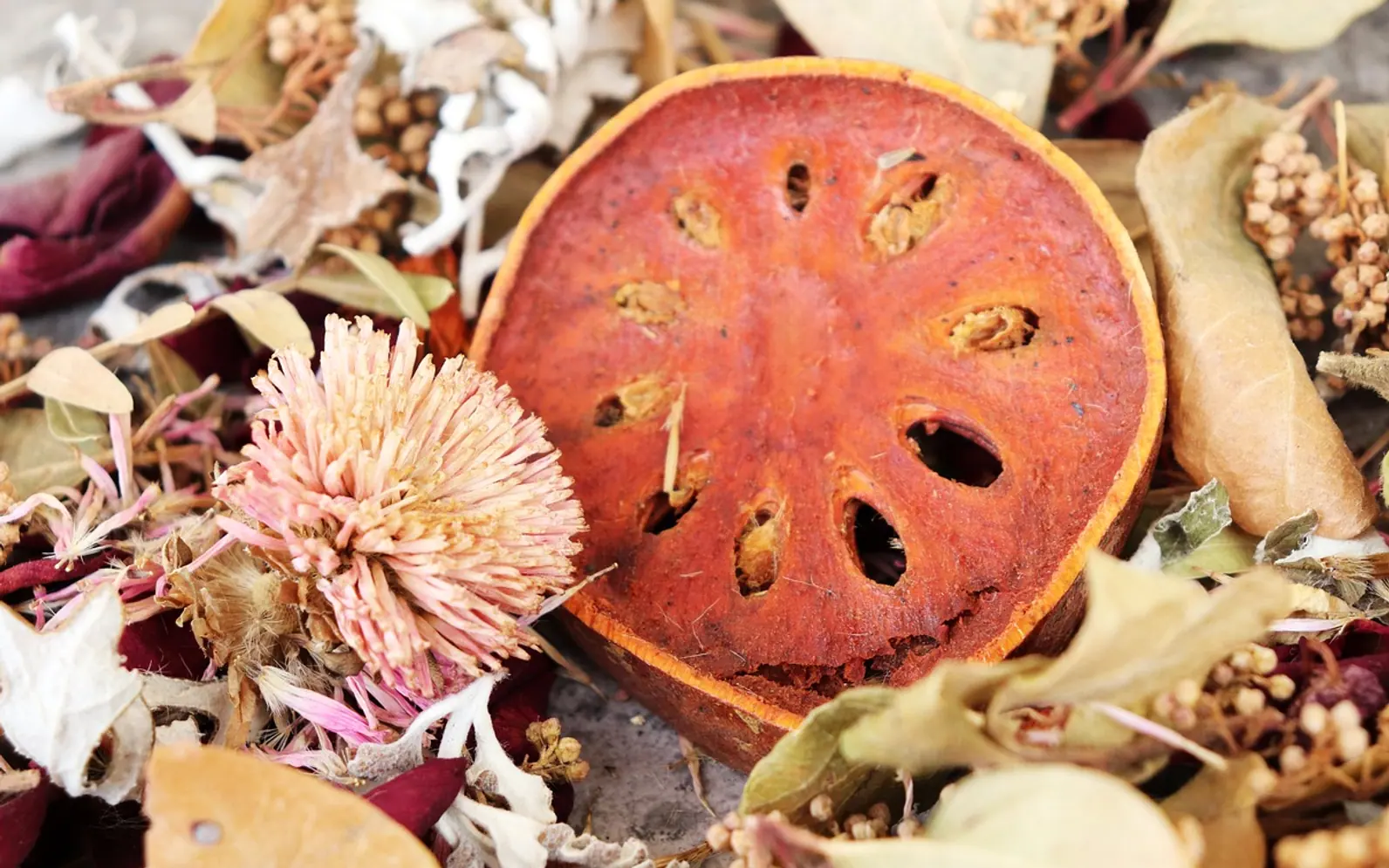
Potpourri is a mix of dried flowers, leaves, peel and spices kept in an open bowl or a fabric bag to scent a room. Making it at home takes three stages: dry the ingredients thoroughly, combine them with a few drops of oil and something that holds the scent, then leave the mix sealed in a jar for a couple of weeks so it settles. A simmer pot on the hob is the quick, wet cousin of the same idea and is ready in minutes.
Where the ingredients come from
Much of a good potpourri is already in the house or garden. Roses, lavender, hydrangea heads, marigolds and cornflowers hold their colour well. Bay leaves, rosemary and mint add an herby note. Orange, lemon and grapefruit peel bring brightness, and whole spices such as cinnamon sticks, cloves and star anise give warmth. A bouquet that is past its best in the vase is a good start too: many of the stems from greener flower deliveries can be dried for a second life instead of going straight to compost.
Drying methods compared
| Method | Time | Best for | Watch out for |
|---|---|---|---|
| Air drying | One to three weeks | Petals, herbs, small whole flowers | Damp rooms cause mould; spread in a single layer |
| Low oven | A few hours | Citrus slices and peel | Scorching; use the lowest setting and check often |
| Microwave between paper | Minutes | Single petals in a hurry | Uneven drying and faded colour |
| Radiator shelf or airing cupboard | Several days | Peel, leaves, seed heads | Dust; cover loosely with paper |
Whatever the method, everything must be completely dry, crisp rather than leathery, before it goes into a jar. Any moisture left behind turns a pleasant mix musty.
Making a dry potpourri
- Gather about four big handfuls of dried material. Aim for a mix of colour and texture: soft petals, a few whole flower heads, curls of peel and some woody pieces such as small cones or cinnamon sticks.
- Add a fixative. A fixative helps the scent last. Orris root powder is the traditional choice; dried citrus peel and crushed whole spices also hold fragrance reasonably well. A tablespoon or two is plenty for a bowl.
- Scent it. Sprinkle a few drops of essential oil over the fixative first, then toss it through the dried material. Start small; it is easier to add than to tone down.
- Cure it. Seal the mix in a jar or lidded tin and keep it somewhere dark. Shake it every few days for about two weeks so the scent spreads evenly.
- Display it. Tip it into a shallow bowl, a basket lined with paper or small cotton bags for drawers and wardrobes.
Three blends to try
- Summer garden: rose petals, lavender, lemon peel, a few mint leaves and a little lavender oil.
- Autumn kitchen: dried apple and orange slices, cinnamon sticks, cloves, star anise and small pine cones.
- Winter evergreen: bay, rosemary, cedar or pine tips, dried cranberries and grapefruit peel.
Leftover pieces fit naturally into other seasonal makes. The same dried slices and spices can be wired onto a ring, as shown in making a wreath from scratch, and a little cinnamon in the dough gives salt dough ornaments a matching scent.
The stovetop version
A simmer pot is potpourri in water. Fill a saucepan two-thirds with water, add sliced citrus, a couple of cinnamon sticks, a few cloves and a sprig of rosemary, bring it to a gentle simmer and turn it down low. The steam carries the scent through the house. Top up the water as it evaporates and never leave the pan unattended or let it boil dry. The mix can sit in the fridge overnight and be reused once or twice before it loses its scent.
Keeping it safe and fresh
- Concentrated essential oils can irritate skin and may be unsafe for some pets; keep bowls and bottles out of reach of animals and small children, and check with a vet if unsure.
- Some dried plants and berries are not safe to eat, so place potpourri where it will not be mistaken for a snack.
- When the scent fades, refresh it with a few drops of oil and another short cure in a sealed jar.
- Dust gathers over time. Replace the mix every few months, and put tired material in the compost.
Potpourri as a gift and a party touch
A small jar of homemade blend with a handwritten label, or a cotton sachet tied with ribbon, makes a gentle present for a host. Bowls of seasonal potpourri also work as low, scented table decorations, the kind of handmade detail suggested for a relaxed daytime garden party, as long as they sit away from the food.
Questions? Write to us.
Suggestions help us plan.
Further in section H · Decor
-
 How to Make a Wreath · 4 minutes
-
 Benefits of Retractable Awnings: Enhancing Outdoor Living Spaces · 3 minutes